

Abu Simbel Coach Day Trip from Aswan
The Abu Simbel Coach Day Trip from Aswan crosses the desert to Abu Simbel, one of Egypt’s major ancient sites. An early hotel pickup starts a long but straightforward day in a comfortable, air-conditioned coach. At the site, you have guided time among the temples and their carved courtyards. It is a practical way to visit Abu Simbel without arranging a private vehicle or finding your own way along the route.
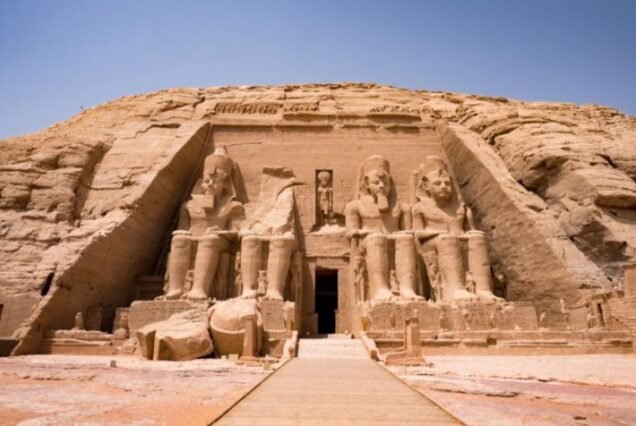
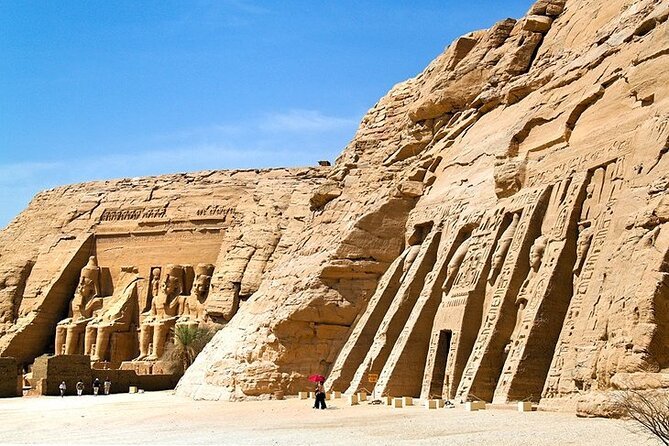
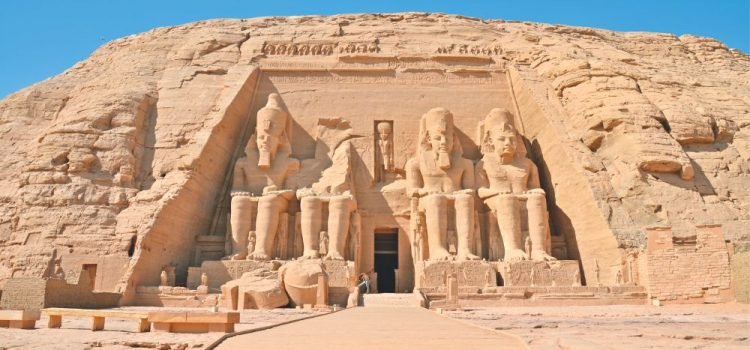
Your first major view is the Temple of Ramses II, often called the Sun Temple. Four colossal seated statues face the approach, each showing Ramses II in royal form. Inside, halls lined with large figures lead towards the sanctuary. Your guide explains the temple’s religious purpose, the king’s building programme and the scenes linking Ramses II with the gods. Moving through the entrance halls makes the scale clearer than viewing the facade from outside.
Next, you can admire the nearby Temple of Queen Nefertari. Ramses II dedicated it to his wife and to the goddess Hathor, and its facade shows statues of both royal figures. The interior is smaller than Ramses II’s temple, but its columns, reliefs and painted details reward travellers who take time to look closely. The two temples sit together in a stark desert setting, and the short walk between them lets you see how they work as a pair.
The wall scenes do more than decorate the interiors. In Ramses II’s temple, murals recount the Battle of Kadesh with chariots, soldiers and the king in battle. Your Egyptologist guide sets these scenes in their historical context and points out details that are easy to miss when exploring alone. The commentary helps first-time visitors, while the pace leaves room for photographs and quiet observation.
- Visit the Abu Simbel temple site on an organised coach excursion from Aswan
- Take in the scale of Ramses II’s Sun Temple and its colossal statues
- Admire Queen Nefertari’s temple and its Hathor imagery
- Study the murals recounting the Battle of Kadesh
- Learn how the temples were relocated in the 1960s
Learning how these ancient monuments were relocated is a key part of the visit. Before the rising waters of Lake Nasser threatened their original location, an international conservation project cut the temples into sections and rebuilt them on higher ground in the 1960s. The present site preserves the monuments’ arrangement and appearance while showing why their survival required such careful engineering.
Travellers often ask if the trip is tiring. The road journey takes much of the day, and the early start is needed for a sensible visit. This excursion suits people who are comfortable with a long coach ride and walking on uneven ground at an exposed site. It works well for history lovers, couples, families with older children and travellers who prefer a fixed plan. It may be less suitable for anyone who needs frequent rest stops or finds extended road travel difficult.
Our team arranges the hotel pickup, transport and visit in the order the day requires, leaving you to focus on the monuments rather than directions and roadside logistics. Wear comfortable shoes, bring water and protect yourself from the sun. Your return transfer to Aswan follows the exploration period, with the exact pickup and return details confirmed for your accommodation.
Included
Expert guide commentary
Air-conditioned coach transport
Visit to the Abu Simbel temples
Assistance from our local tour team
Hotel pickup and drop-off in Aswan
Excluded
Gratuities
Any services not listed as included
Entrance fees to the Abu Simbel temples
Food and drinks
Personal expenses
Don’t forget
A light layer for the early morning coach journey
Camera or phone with spare battery
Valid identification or passport details if requested for site access
Hat, sunglasses and sunscreen
Comfortable walking shoes
Water and sun protection
Your Itinerary
Your guide also explains how the temples were relocated in the 1960s to protect them from the rising waters of Lake Nasser. After the visit, rejoin the coach for the return transfer to Aswan, with another practical rest stop on the long desert road before hotel drop-off.





Reviews
There are no reviews yet.